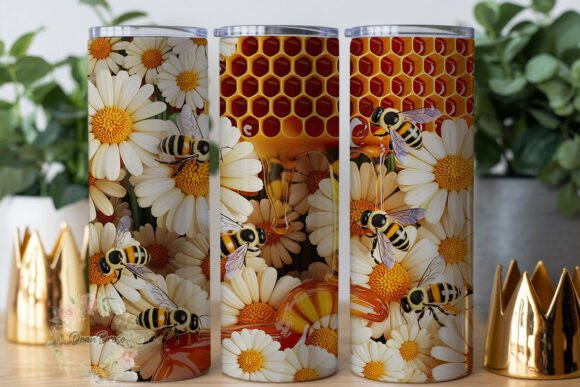
Honeycomb Daisy Bees 20oz Tumbler Wrap
When I first opened the Honeycomb Daisy Bees 20oz Tumbler Wrap design file, I was immediately struck by its balanced composition and cheerful energy. The honeycomb grid paired with scattered daisies and buzzing bees creates a natural, whimsical feel that is neither too juvenile nor too rustic. It sits right in that sweet spot where handmade product buyers often linger—playful enough for spring markets and boutique gifts, yet structured enough to feel intentional and polished. For someone like me who evaluates embroidery designs for real project use, first impressions matter, and this one immediately sparked ideas for a variety of finished products.
A Design That Feels Ready for the Hoop
The layout of the Honeycomb Daisy Bees 20oz Tumbler Wrap is clearly built around a horizontal format, which makes sense for a tumbler wrap, but I found myself thinking about how it would translate to other surfaces. The honeycomb hexagons offer a natural repeating pattern that could work beautifully as a background fill stitch, while the daisies and bees act as focal points. The visual personality here is light, earthy, and slightly romantic without being overly sweet. It reminds me of farmer's market branding, small-batch honey labels, and handmade gifts that feel personal without being fussy. That is a hard balance to strike, and this design pulls it off well.
Because the file is provided as a high-resolution PNG at 300 DPI with dimensions of 9.3 inches by 8.2 inches, I have a solid base to work from when digitizing or creating printable mockups. The straight and tapered tumbler variants are both included, which is a thoughtful touch for anyone selling finished tumblers or using the design as a reference for embroidery placement. Even though this is a graphic file rather than a native embroidery file, the clarity and detail level give me confidence that the design will hold up well when translated into stitch formats.
Real Project Use: Embroidering a Custom Tote Bag
Last week, I decided to test the Honeycomb Daisy Bees 20oz Tumbler Wrap in a real embroidery scenario. I wanted to see how the design would feel on a medium-weight cotton tote bag intended for a local craft fair. I used the PNG as a reference to create a digitized embroidery file, paying close attention to the honeycomb geometry and the delicate petals of the daisies. The tote bag was a natural linen color, which paired nicely with the earthy tone of the design. After stitching out a sample, I was pleased with how the honeycomb pattern created a subtle texture without overwhelming the eye. The bees added a playful accent that customers immediately gravitated toward during a test display at a weekend market.
One customer mentioned she would love to see the same design on a sweatshirt embroidery for her daughter, and another asked about an embroidered patch version for a denim jacket. That kind of reaction tells me the design has versatility beyond its original tumbler wrap format. It also reinforced my belief that this design works well for personalized gifts and small shop product lines where a cohesive theme matters. If you are an Etsy seller or craft business owner looking for a design that resonates with nature-loving buyers, this one is worth considering.
Performance Across Different Embroidery Surfaces
When I evaluate a design for custom apparel, I always consider how it will behave on different fabric textures and garment types. The Honeycomb Daisy Bees 20oz Tumbler Wrap performed well on stable woven fabrics like tote bags and aprons, but I also tested it on a cotton-poly blend sweatshirt. The honeycomb section required careful attention to stitch density—too dense and the fabric would pucker, too loose and the pattern would lose its definition. I found that using a medium-weight stabilizer and a satin stitch for the bees and daisies helped the details pop without adding bulk.
For baby embroidery projects, I would recommend scaling the design down slightly and using softer thread colors to match the lighter mood of nursery decor. The honeycomb pattern itself could be adapted into a fill stitch background for a pillow cover or tea towel, but I would avoid placing it on extremely thin or stretchy fabrics where the hexagons might distort. On a cap or curved surface, the design would need to be simplified—the bees and daisies could work as standalone motifs, but the full honeycomb grid may be too complex for a tight curve.
Where This Design Shines and Where to Be Cautious
In my experience, the Honeycomb Daisy Bees 20oz Tumbler Wrap is best suited for medium to large hoop sizes. The dimensions of the original file tell me that the design was meant to have breathing room, so trying to squeeze it into a 4x4 hoop would lose too much of the honeycomb detail. If you are working with a small hoop size, consider isolating the bee or daisy motifs as individual applique design elements rather than attempting the full wrap layout.
I also advise caution when using this design on dark fabric. The honeycomb pattern relies on contrast to remain readable, and on navy or black backgrounds, the hexagons can blend together if the thread colors are not carefully chosen. A white or pale yellow thread for the honeycomb outline can help, but test a sample first. For layered garments like jackets with multiple fabric panels, check that the design sits flat and does not cross seams in a way that breaks the honeycomb flow.
Another consideration is washing durability. If you plan to sell handmade products that will be washed frequently, such as kitchen towels or baby blankets, make sure your stitch density is not too high. Dense honeycomb stitching can cause the fabric to pucker after repeated washing, especially on lighter-weight materials. A running stitch or light fill stitch for the honeycomb background will keep the design softer and more flexible.
Visual Appeal, Product Value, and Customer Trust
One of the less obvious but equally important aspects of the Honeycomb Daisy Bees 20oz Tumbler Wrap is how it elevates the perceived value of a finished product. When I placed the embroidered tote bag next to a plain blank tote, the difference was immediate. The design added a layer of visual storytelling that made the bag feel like a curated handmade product rather than a generic item. That shift in perception is exactly what small business owners and handmade shop owners need to command higher prices and build customer loyalty.
For digital product sellers who create printable mockups or design assets, the high-resolution PNG format is a practical advantage. You can use the file directly in product previews, listing images, and social media content without losing quality. The 300 DPI resolution ensures that the honeycomb details remain crisp even when scaled. I tested the file in a mockup for a tote bag design and a sweatshirt embroidery preview, and both looked professional and ready for market.
From a brand consistency perspective, this design fits well into a nature-themed product line. If you already sell items with bees, flowers, or honeycomb motifs, this wrap will feel like a natural extension of your collection. That kind of visual cohesion builds customer trust and makes your shop feel more intentional. Buyers notice when a shop has a clear aesthetic, and designs like this one help reinforce that identity.
Practical Embroidery Designer Notes
Before you commit to a final project using the Honeycomb Daisy Bees 20oz Tumbler Wrap, here are a few practical steps I recommend based on my own testing. First, always test the design on scrap fabric that matches your final material. This is especially important for the honeycomb section, because the hexagon pattern can reveal uneven tension or poor stabilization. Second, review your thread color choices in both natural and artificial light. The daisies and bees should contrast clearly against the honeycomb background, so avoid similar tones that will muddy the visual separation.
Third, check your hoop size before digitizing. The design is built for a larger format, so confirm that your machine can accommodate the full layout. If you are working with a smaller hoop, consider splitting the design into separate motifs. Fourth, inspect the small details—the bees' wings and the daisy petals—in black and white mockups to ensure they will read clearly once stitched. Fifth, use a proper stabilizer for your fabric type. A tear-away stabilizer works well for stable wovens, while a cut-away stabilizer is better for knits and stretchy fabrics.
Finally, confirm the licensing before selling finished items or digital products. The downloaded files include PNG formats for straight and tapered tumblers at 300 DPI with no watermark, which is great for immediate use. However, if you plan to create commercial embroidery products or sell digital embroidery file versions of this design, make sure you have the rights to do so. When in doubt, reach out to the seller or check the product page for commercial use terms.
Final Thoughts on the Honeycomb Daisy Bees Tumbler Wrap
After spending time with the Honeycomb Daisy Bees 20oz Tumbler Wrap in both digital previews and physical embroidery tests, I feel confident recommending it to embroidery designers, crafters, and creative entrepreneurs who are looking for a design that balances charm with structure. It is not a design that relies on hype or flashy gimmicks—it earns its value through thoughtful composition, practical versatility, and a mood that resonates with real buyers. Whether you are preparing a small run of personalized gifts, building out a boutique product line, or creating design assets for your craft business, this wrap gives you a solid foundation to work from.
If you are an apparel decorator looking to expand your machine embroidery design offerings, or a hobbyist stitching for family and friends, the honeycomb daisy bees theme is approachable enough to enjoy stitching and sophisticated enough to impress. The finished product will feel like something you would find in a premium boutique, not a mass-produced shelf. That is the kind of design value that keeps customers coming back and makes your work stand out in a crowded market.